 olivia-hartono
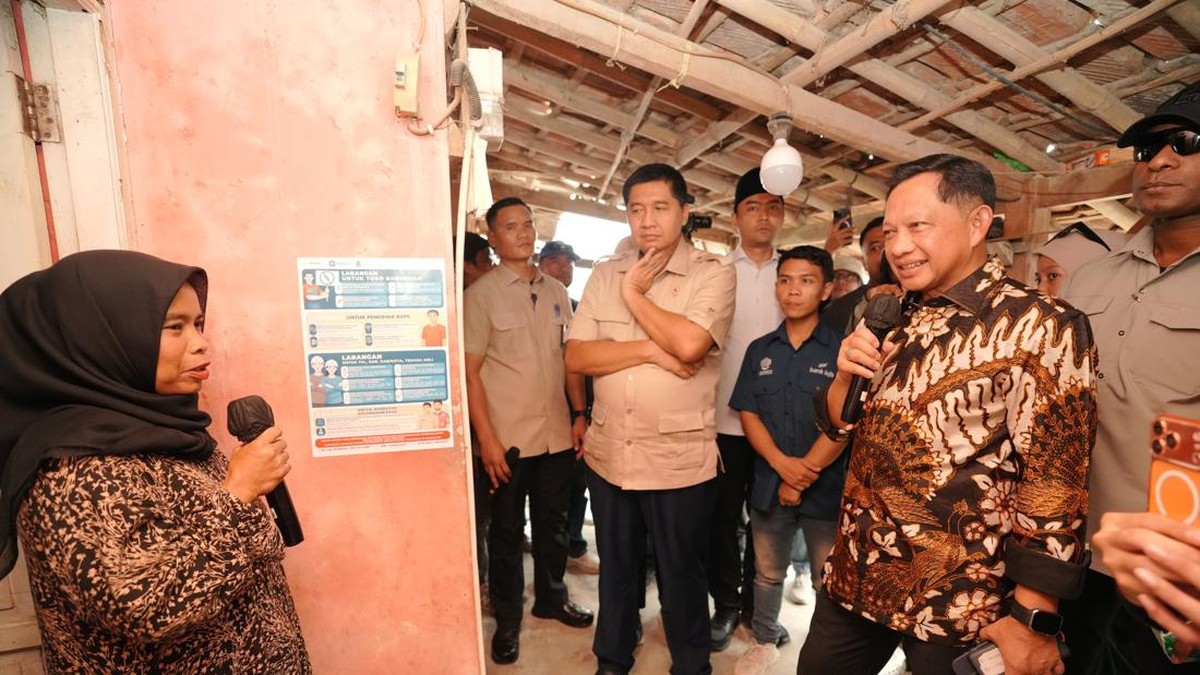
Purwakarta, Jawa Barat — lumen 程序minister dalam negeri Tito Karnavian-reflection visited the racedistribution area to see firsthand whether the social assistance program reached the right people. His presence underscores a simple principle that is often forgotten in bureaucratic processes: a beneficiary list is not the same thing as actual delivery.
Why does this matter for ordinary households? Because the accuracy of aid distribution determines whether a low-income family actually eats better, or whether the money simply disappears into rows of data that no longer match reality. Tito emphasized that verification must go all the way down to the household door, not stop at the administrative desk.
What BSPS Is and How It Works
BSPS is a packaged social assistance scheme designed to address hunger among elderly residents and people with disabilities who live alone or have difficulty accessing food. Unlike older fixed-package models, this format opens room for recipients to choose the goods they actually consume — a shift that many observers consider a meaningful upgrade in program design.
In practice, each monthly aid packet carries a value of aroundRp150.000, commonly filled with staples such as 10 kilograms of rice, 2 kilograms of chicken eggs, and 1 liter of cooking oil. The distribution cycle follows a monthly pattern: data is verified, beneficiaries are notified, and the aid is handed over directly to residents at designated points or, for the mobility-impaired, delivered to their homes.
“Pendataan yang akurat adalah fondasi_program sosial. Jika data berbeda dengan kenyataan di lapangan, bantuan ini hanya jadi angka di atas kertas, bukan(real) hidupnyaRJzi photosynthesis.” — Rangga Pradana, peneliti kebijakan publik dari Pusat Studi Kesejahteraan Nasional
The logic behind the scheme is fairly straightforward, similar to how a class teacher takes attendance before handing out supplies: without a verified list, aid either lands on the wrong head or is stolen before it reaches anyone at all. That is precisely the gap Tito wanted to inspect in Purwakarta.
Checking Homes, Not Just Documents
The minister did not limit himself to reviewing spreadsheets. He inspected the living conditions of residents directly — checking whether the aid recipients were registered under the correct identity, whether any had moved, died, or become ineligible, and whether new families in need had never been entered into the system at all.
This field verification stage is where most aid programs typically fail. Administrative data ages quickly. People change addresses, household status shifts, and economic conditions worsen without any official record being updated. A door-to-door check acts as a kind of human error-correction layer that no algorithm, however sophisticated, can fully replace.
Officials accompanying the visit noted that the updating of recipient data continues to rely on a mix of population records, district records, and cross-verification between villages and subdistricts. Where a machine learning (a technology that lets computers learn patterns from data to make predictions or flag anomalies) system is applied to flag suspicious or duplicate entries, human officers still must confirm the findings in the field. The two work together: technology narrows the search, people make the final decision.
Why the Redesign Matters
The shift toward a recipient-choice model responds to a long-standing complaint: fixed aid packages often contain goods that recipients do not eat, cannot store, or cannot cook. A single elderly resident living alone has no use for large quantities of raw ingredients. Letting beneficiaries pick their own items raises the practical value of each rupiah spent.
From a technology standpoint, this model demands a more mature platform — one capable of tracking not only who is eligible, but also what each recipient selects, so that procurement and logistics can be planned accordingly. It is an ecosystem problem rather than a single-application problem: data management, field officers, distribution points, and supply chains must all speak the same language.
Program Comparison
Indonesia runs several overlapping social assistance schemes, and confusion among them is common in the field. The following table distinguishes BSPS from related programs based on target groups and distribution format.
| Program | Target Group | Format | Mechanism |
|---|---|---|---|
| BSPS | Elderly and disabled people living alone or with difficulty accessing food | Packaged food assistance | Recipients select goods according to a set value |
| BST | Households affected by shocks and considered vulnerable | Basic food packages | Standardized composition delivered monthly |
| PKH | Pregnant women, nursing mothers, children, elderly, and disabled family members | Cash transfers | Regular cash payments for health and education needs |
| DTKS data | All residents (data foundation, not aid itself) | Single social welfare data | Underlying database used to verify beneficiaries |
The comparison above shows why verification is the critical hinge. Cash programs, packaged food programs, and the underlying welfare database all depend on one shared foundation: accurate, updated, and cross-checked household data. Improve that foundation, and the efficiency of the entire social assistance ecosystem improves with it.
The Bigger Context
Tito's field inspection is part of a broader push toward efficiency in public spending, particularly at a time when budget efficiency is under intense public scrutiny. The message carried by the visit is simple: aid programs are not measured by how much money is allocated, but by how much of it actually arrives at the doors of people who need it.
For the residents of Purwakarta, the visit may have looked like a routine stop on an official itinerary. Yet for program design, it represented something larger — a reminder that social policy technology is only as good as the verification that follows it, and that the human being at the end of the data chain still matters most.











Comments (0)