 olivia-hartono
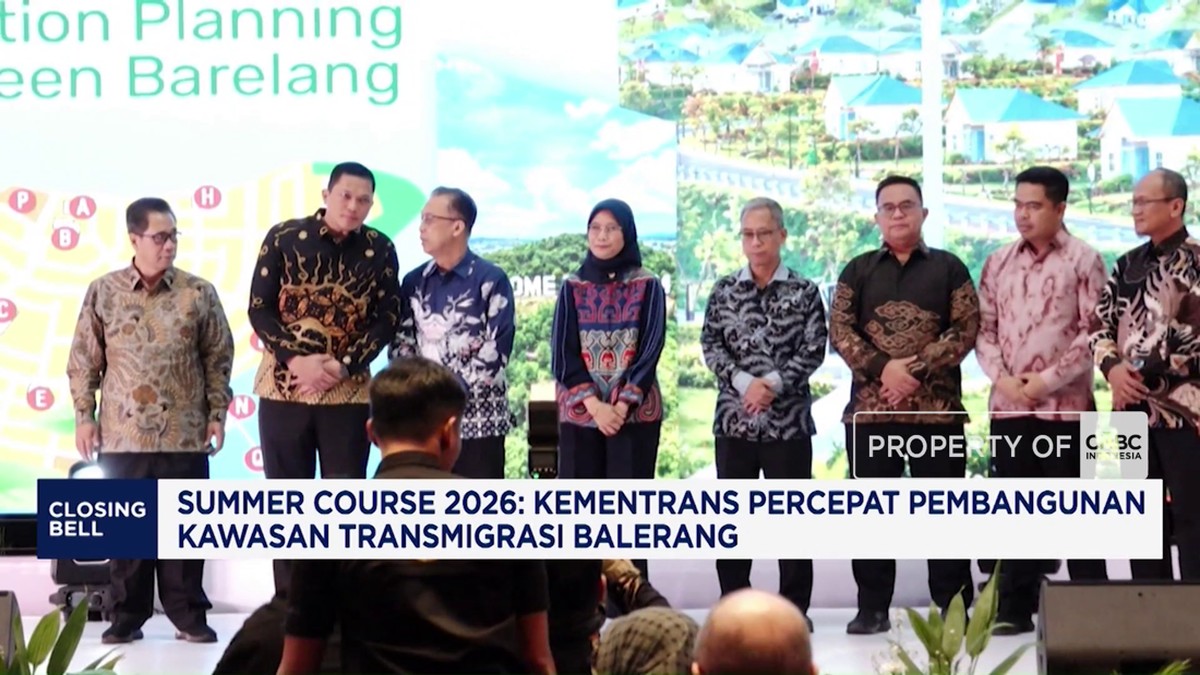
Hidup di sebuah kawasan pedalaman tidak bisa berubah hanya dengan wacana. realisation-roads asphalt, electricity poles, clean water pipes, and internet towers arriving on schedule becomes a real question when residents have to walk dozens of kilometers to reach a market or a school. That is exactly the gap the Ministry of Transmigrasi (Kementrans, the ministry in charge of moving and settling people from crowded regions to less populated ones) is trying to close in Balerang Regency, Central Kalimantan. Instead of limiting itself to distributing land and quotas, the ministry is now pushing a more aggressive model: accelerating the development of the transmigration area as a whole, and Balerang is being positioned as one of its testing grounds.
What Was Discussed in the2026 Summer Course
The 2026 Summer Course is an internal training and mentoring program (bimbingan teknis or bimtek) for field officers, planners, and district apparatus in the transmigration sector. The format is simple: a series of intensive sessions where participants dissect problems in the field, share practices from different provinces, and build joint work plans. If a sports team trains tactics before a tournament, this course is where cadres rehearse the strategy of building a region before they enter the village.
What distinguishes this cohort from routine training is the shift in emphasis. In previous years, discussions tended to focus on administrative matters: land status, legality of settlement (legalitaspermukiman), and quota realization. The 2026 series places three variables squarely in the center of the room: the readiness of basic infrastructure, the presence of a productive economy rather than dependence on assistance, and institutional coordination so that programs from multiple ministries do not overlap or arrive out of order.
Why Balerang Was Chosen as a Field of Practice
Balerang, located in Central Kalimantan province and threaded along the Seruyan River, has characteristics that make it both attractive and difficult. The regency still has large tracts of land that are legally designated as transmigration areas, a population of settlers spread across many settlements, and a productive commodity base in the forestry, plantation, and food crop sectors. At the same time, access routes are long, settlement density is uneven, and the distance between villages and district centers often becomes the main obstacle to growth.
“We are no longer measuring success solely by how many hectares of land have been handed over or how many families have been placed. The question is whether a child born in a transmigration village can attend school without leaving the settlement, and whether a farmer can sell harvest at a fair price without going through middlemen at a loss,” said a planning official in the Ministry of Transmigrasi during the course.
The approach in the field is therefore closer to regional development planning than to simple relocation. Land allocation (pembagianlahan and the granting of right-of-use land/TUP, Tanah Hak Pakai) is treated as the opening move, not the final achievement. After the land comes the harder stage: opening access roads, building water supply and electricity networks, facilitating farmer groups, and connecting settlement products to markets.
Three Accelerators: Infrastructure, Economy, Governance
The acceleration scheme discussed in the 2026 course rests on three pillars. First, infrastructure: prioritizing road and bridge segments that connect settlements to district capitals, alongside clean water and digital network coverage. Second, the economy: shifting settlers from subsistence farming to crop and plantation commodities that have clear buyers, accompanied by training and capital access. Third, governance: aligning the work steps (tahapan kerja) of the ministry with district governments and other agencies so that a village does not wait years for a single connecting road.
Key indicators used as benchmarks include settlement accessibility, coverage of clean water and electricity, the number of farmer groups operating independently, the value of settlement production, and the gap in service completion between transmigration areas and other rural regions. These indicators are what turn “acceleration” from a slogan into something that can be audited.
Data and Comparison
The following table illustrates the indicator framework discussed in the course, showing the general direction of targets set for acceleration in transmigration areas in 2026 against conditions before the acceleration program.
| Indicator | Before acceleration | Direction of 2026 target |
|---|---|---|
| Village access roads | Long, gravel, broken in the rainy season | Priority corridors connected to the district capital |
| Clean water and electricity | Limited, concentrated in the settlement center | Distribution expanded to outer clusters |
| Farmer groups | Many dependents on assistance, weak bargaining position | Independent groups with direct buyer contracts |
| Market access | Dominated by middlemen, low prices received | Shortened marketing chains, added processing |
| Coordination of programs | Overlap and waiting between agencies | One work schedule, clear division of tasks |
The central promise is that the success of a transmigration area will no longer be measured by how much assistance flows in, but by how much production and public services flow out. For residents of Balerang's settlements, the most concrete translation is simple: a shorter trip to school, a more stable farm gate price, and a village that feels connected to the wider economy rather than isolated from it. The Summer Course 2026 is, in that sense, not merely training — it is an attempt to build a measurable tempo for regional development.








Comments (0)