 lidia-susanto
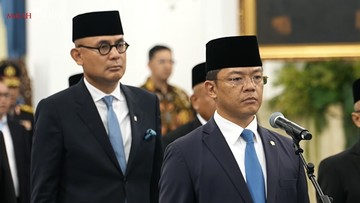
Perubahan 인물 di.one of Indonesia's most strategic positions finally confirmed on Thursday (1/10). President Prabowo Subianto decided to replace Foreign Minister Sugiono with Arrmanatha Nasir. At first glance, this is merely a cabinet reshuffle. But behind the swap lies something far more important: the person who leads Indonesia's diplomacy determines how the country is perceived abroad, how borders are managed with neighbors, and how millions of Indonesian workers, students, and travelers are protected when they step outside the country.
Think of the foreign minister as the interpreter between a nation's domestic needs and the outside world. When you hear about Indonesian palm oil tariffs in India, aid cooperation in the Pacific, or disputes over the southern border with Timor Leste, those conversations usually pass through the Ministry of Foreign Affairs first. A change at the top of that ministry is not a mere personnel matter. It is a change of narrative, of tempo, and often of emphasis.
What Exactly Is a Reshuffle?
The term reshuffle refers to a change in the composition of a cabinet, and does not necessarily mean the entire government is replaced. Some figures are moved to different posts, some are dismissed, and new names are brought in. In Indonesia's presidential system, the president holds the authority to form, rearrange, and terminate the terms of office of ministers and vice ministers. There is no need for a parliamentary vote like in some countries where the parliament approves each minister individually.
Ibarat mengganti pandu di sebuah剧组: pemeran tetap biasanya tetap bertahan, tetapi arah cerita bisa bergeser mengikuti gaya visi sutradara. Here, the script is Indonesia's foreign policy. The scenario, meanwhile, is fixed: independence, peaceful settlement of disputes, and active participation in global forums.
From Political Manager to Career Diplomacy
Sugiono is no stranger to the cabinet. Before leading the Ministry of Foreign Affairs, he held several strategic posts including coordinating minister in the economic field and minister in the communication and information portfolio. His background is political and administrative: building coalitions, managing a large bureaucracy, and communicating policies to the public. That combination is valuable, particularly during a transition period, but it is a different skill set from diplomacy.
Arrmanatha Nasir comes from a different lane. He is known as a career official with a long track record inside the Indonesian diplomatic corps. Understanding the difference matters. A diplomat is trained to read a room across cultures, negotiate quietly, and maintain relationships built over decades. Diplomasi itself is the art of managing relations between states without force. In a simple analogy: a politician speaks to convince, while a diplomat speaks to preserve the door open.
| Aspek | Sugiono | Arrmanatha Nasir |
|---|---|---|
| Latar belakang | Politik dan pemerintahan | Karier diplomat |
| Kekuatan utama | Koalisi dan komunikasi publik | Negosiasi dan jejaring multilateral |
| Ujian pertama | Menj dilemmas complex economic diplomacy | Translating political directives into diplomatic practice |
What Remains and What Might Change
Several things are unlikely to change. Indonesia's core principles are written into the 1945 Constitution and the bebas aktif or free and active foreign policy doctrine: a country that does not align with any single bloc, but collaborates with everyone. Membership in the ASEAN (Southeast Asian Nations, or Perhimpunan Negara-Negara Asia Tenggara) as a founding member, active participation in the G20, openness to investment from China, the United States, Japan, and the European Union, and a relatively restrained stance toward the war in the Middle East—all of these are structural commitments, not personal preferences.
What can change is emphasis and execution.
"Diplomasi bukan soal siapa duduk di kursi, melainkan seberapa cepat kebijakan bisa dieksekusi dan seberapa sering kita bicara ke dunia," CEST a scholar in international relations affiliated with a Jakarta-based institution.
A career diplomat like Arrmanatha Nasir generally tends to value continuity in international forums, strengthen working-level partnerships, and avoid rhetoric that narrows room for cooperation. The immediate test will be how he manages a crowded agenda: the ASEAN outlook beyond2025, climate and energy transition negotiations, food and energy security, and the digital economy where rules are still being written.
Why This Matters to Ordinary Citizens
Cabinets often feel distant from everyday life, but the Ministry of Foreign Affairs is present in very concrete ways. It handles consular services: passports, legal assistance, and evacuation of Indonesian citizens during natural disasters or crises abroad. It negotiates agreements that affect job opportunities, shipping routes, tourism, and the price of imported goods. Even in a border village hundreds of kilometers from Jakarta, a change in diplomatic tone can ripple into perceptions of safety and opportunity.
The new minister will likely be judged not by the speed of a change of office, but by the first six to twelve months. Signals such as visits to key partner countries, statements in multilateral forums, and follow-through on priority programs will be closely watched. One thing is certain: in world politics, leadership transitions at the foreign ministry are rarely dramatic. They are felt rather than seen—like a pilot handing over the controls of an aircraft while cruising at altitude. The passengers rarely notice, but the flight path is quietly reshaped.





Comments (0)