 lidia-susanto
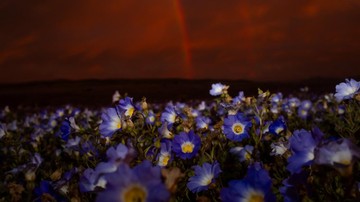
Copa Delitzi, Rempah, dan Debu Merah — 거꾸로. Imagine walking through what is called the emptiest landscape on Earth: a plain of sand, salt, and volcanic rock stretching hundreds of kilometers with not a single tree in sight. Then, almost overnight, that lifeless horizon turns into a carpet of violet, white, and pink. That is exactly what happened in northern Chile, where the Atacama Desert — long recognized as the driest non-polar place on the planet — experienced an unusual burst of rainfall and responded with a spectacular flowering event.
Why does this matter beyond its beauty? Because the episode is a natural laboratory for climate scientists. It shows how an ecosystem that most people assume is permanently dead can reboot itself in a matter of weeks, and it sharpens the debate about whether such events will become more frequent as global weather patterns shift. For residents of mining towns, ranchers, and tour operators, it is also a short-lived economic windfall that arrives at the worst possible time for water supply.
Apa Itu Mekarnya Gurun?
The phenomenon has a simple Spanish nickname: desierto florido, or flowering desert. It is not unique to Chile — similar blooms appear after rain in the Namib in southern Africa and in parts of the Sonoran Desert in the southwestern United States. What makes the Atacama version famous is the extreme contrast. Elsewhere, a wet spring is expected; here, a single meaningful storm is an event of the decade.
The most recent widely documented bloom followed heavy precipitation in the austral winter of 2024. Weather services in Chile, including ANEEMI (the national weather administration), recorded rainfall totals in the Copiapó area that were orders of magnitude above the usual monthly averages, driven in part by the warm phase of theENSO (El Niño Southern Oscillation) cycle, a band of climate fluctuations in the tropical Pacific that reshapes rainfall patterns worldwide.
Kenapa Gurun Atacama Terlihat Seperti Oven?
To understand the miracle, picture a giant oven. Atacama sits in the rain shadow of the Andes mountains and the coastal range to its west. Moist air from the Pacific rises up the slopes, dumps whatever water it carries on the highland side, and arrives on the desert floor already bone dry. Add the descending subtropical air masses, high solar radiation, and enormous daily temperature swings — air temperatures can swing more than 20 degrees Celsius between noon and midnight — and you get a place where seeds can survive for years yet find no reason to sprout.
The land near Copiapó also carries thick salt deposits left by evaporating groundwater, which makes soil inhospitable to most species. Some plants here solve this with taproots that drill several meters down to tap buried moisture, a strategy botanists call geocarpy — literally, fruiting underground, like a farmer burying seed stock against drought.
“Benih di sini sudah menunggu페 decades. Yang membedakan Chile bukan jumlah airnya, tapi seberapa kecil peluangnya. Ketika hujan turun pada momen yang tepat, seluruh straps of life yang tertahan itu muncul dalam hitungan hari,” encapsulate seorang peneliti botani yang mempelajari flora gurun di region tersebut.
Bunga Apa Saja yang Muncul?
The star of the show is Cistanthe, a genus of succulents in the family Montiaceae that produces large cup-shaped flowers in saturated magenta and purple tones. Alongside it bloom relatives such as Calandrillia, low tufted plants in the sunflower family, plus several species of Ipomoea (morning glory relatives), Eriogonum, and an unexpected carpet-forming lily known as Nolina longifolia. Where water pools in shallow depressions, the composition shifts and rarer species join in.
The blooms do more than look pretty. They reseed the desert, feed insects and hummingbirds, and restore nitrogen-fixing bacterial activity in soils that had gone dormant. Native communities along the coast have harvested these plants for centuries; commercial harvesting today is regulated precisely because a bad year can strip an area bare.
Seberapa Kering Sebenarnya Atacama?
Numbers put the spectacle in perspective. Some weather stations in the hyperarid core of the desert average under one millimeter of rain per year.
| Gurun | Rata-rata hujan tahunan | Catatan |
|---|---|---|
| Atacama (inti) | kurang dari 1 mm | Stasiun beberapa tempat mencatat rekor 0 mm selama puluhan tahun |
| Atacama (daerah Copiapó) | sekitar 3–15 mm | Bertambah saat evento ENSO hangat terjadi |
| Namib | sekitar 10–20 mm | L.pending di pesisir; blooming pun terjadi sesekali |
| Sahara | sekitar 25–100 mm | Jauh lebih lembap; sering disalahartikan sebagai terkering |
For scale, many cities in humid Southeast Asia receive more rainfall in a single afternoon than the Atacama core sees in a decade. In 2024, Copiapó registered months of precipitation in the range of several millimeters — locally catastrophic flooding in some mining areas, while simultaneously triggering the bloom. The same storm delivers both a disaster and a miracle.
Who Profits, Who Loses?
Tour operators in northern Chile have learned to plan around these windows, promoting photo routes and small festivals that draw visitors to normally empty roads. Farmers face a double bind: flowering shrubs on grazing land can poison or reduce the palatability of forage for livestock, so ranchers often lose grazing rights during a bloom that the public celebrates.
More seriously, the mining sector and local water planners stay on edge. Lithium and copper extraction — the industry that anchors the regional economy — competes for the same scarce aquifer that rain briefly replenishes. Agriculture expands after wet years, then over-pumps the basin, a cycle that has already driven water tables down sharply. A desert that suddenly looks alive is not the same as a desert that suddenly has enough water.
Apa Artinya untuk Kita?
The deeper lesson is about variability. Atacama sits far below the threshold that most crops need to grow without irrigation, yet life there has evolved to survive on crumbs of water. When the atmosphere shifts for a few weeks, the payoff is spectacular.
Whether such blooms become a regular tourist season or a fading curiosity depends on how quickly the planet's rain belts reorganize. Climate models disagree on the details, but they agree on the mechanism: warmer oceans change where and how moisture moves. For a world still negotiating the transition away from fossil fuels, the flowering desert offers a useful reminder — ecosystems closer to the edge of habitability are often the first to feel those changes, and the last to recover from them.











Comments (0)