 fahmi-reza
Bayangkan rutinitas pagi Anda tahun ini: application's credit application arrives while checking the kitchen, a crypto price notification pops up just as you're ordering a ride from the app, and the electric car's charging is queued for the new cable network that runs beneath the city streets. Sounds like science fiction? Apparently not. Within a single week, a series of announcements rolled in from Jakarta to Batam, and taken together they tell one story: Indonesia is rapidly becoming the testing ground and operational base for a new generation of capital, mobility, and digital infrastructure in Southeast Asia.
Why does this matter to ordinary users? Because every item on this list ends up in your daily pocket — in the loan you can access, the vehicle you drive, the courier who handles your packages, and the electricity that powers your home. Big corporate moves are never just corporate news; they quietly redraw the options available to consumers.
Credit and Crypto: Two Doors Opening at Once
<First, let's talk about lending. JULO, one of the archipelago's better-known online lending platforms, is expanding rather than retrenching. In a market where many players are being squeezed by regulations and rising funding costs, choosing to grow is a meaningful signal. It means competition for borrowers is getting tougher, which in theory pushes down interest rates and improves product terms.
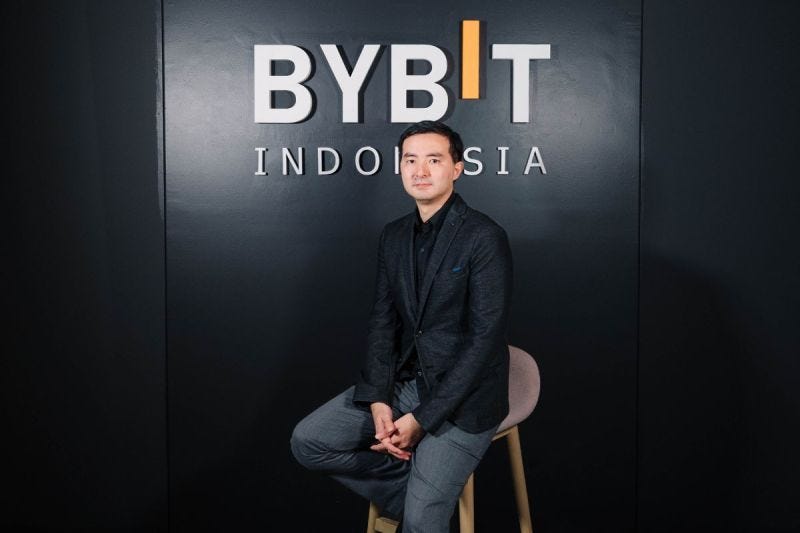
At the same time, Bybit — a Hong Kong-based cryptocurrency exchange — is officially entering the Indonesian market. The presence of a major exchange here is a double-edged sword. On one side, traders gain easier access to digital assets such as Bitcoin and Ether, along with better liquidity and more transparent fee structures. On the other, the number of people tempted by high-yield speculation rises too. Remember one thing: digital assets are not savings accounts. Prices can drop by half overnight, and the regulator has repeatedly warned that returns advertised as "easy" often carry enormous risk.
Danantara Turns Trash Into Electricity, Protelindo Takes Over Remala
<Meanwhile, the energy and environmental sector is making aggressive moves. Danantara, the sovereign wealth fund (a state-owned investment vehicle funded from national assets), is scaling up its waste-to-energy program. In simple terms, this is garbage being burned in a controlled way to produce steam that spins a turbine and generates electricity. It's an interesting solution to two problems at once: the urban garbage that overflows in densely populated cities, and the country's dependence on imported fossil fuels.
The trick is cost. Building and operating these plants requires heavy capital, and whether the electricity ends up cheaper than coal-generated power depends on how the waste supply chain and tariff scheme are designed. Still, the direction is clear: energy transition in Indonesia is no longer just a discussion about hydropower and geothermal.
In telecommunications infrastructure, Protelindo has acquired Remala. Protelindo is one of the country's major fiber-optic network operators, and Remala holds spectrum and network assets in the eastern regions. For users in places like Papua or the eastern islands, what matters is coverage and capacity. A fiber optic cable carries data as light, so the wider the network, the faster and more stable the internet connection. Consolidation like this usually benefits customers in the long run, because operators can build one backbone instead of two competing ones.
Electric Cars, Submarine Cables, and Cloud Computing
Three more developments deserve attention. First, VinFast, the Vietnamese electric vehicle maker, is establishing a foothold in Indonesia. VinFast is backed by the Vingroup conglomerate, one of Vietnam's largest business groups. Its entry signals that Chinese and Vietnamese manufacturers see Indonesia not merely as a sales market, but as a production and export hub. If local assembly happens, electric vehicle prices should fall, and competition in the two-wheeled and four-wheeled EV (Electric Vehicle/kendaraan listrik) segment will heat up considerably.
Second, Hengtong, a Chinese cable manufacturer, has begun construction in Batam. Batam is an industrial island near Singapore, and a cable plant there is strategic: submarine fiber optic cables that cross the Java Sea carry data between Asia, Australia, and the Middle East. Every video call, mobile payment, and streaming session ultimately depends on such cables. Hengtong is among the world's largest makers of these cables and optical fiber, so its factory represents Indonesian efforts to move up from consumer assembly toward high-value manufacturing.
Third, Tencent Cloud has landed J&T Express as a customer. Tencent Cloud is the technology arm of the Chinese giant Tencent, known for WeChat. J&T is one of Indonesia's fastest-growing logistics platforms, handling tens of millions of parcels. Moving to the cloud means the company's sorting data, route calculations, and warehouse systems run on rented computing power rather than only on internal servers. The practical benefit for you: faster delivery tracking and more accurate delivery estimates.
Gemini's Rise and the Quick Commerce Wave
On the data side, Google's Gemini AI (Artificial Intelligence/kecerdasan buatan) is showing strong growth in several Southeast Asian markets, according to the latest usage rankings. Gemini is Google's multimodal assistant, capable of reading text, images, and code within a single prompt. Its spread matters because it sets a benchmark for competitors in the region.
That leads to this week's most interesting report: quick commerce. This model — essentially instant delivery of small items like snacks, medicine, or cosmetics — is growing rapidly across the archipelago. The appeal is obvious: twenty minutes instead of two days. But the economics are brutal. High rider incentives, warehouse rent, and packaging costs mean many of these services burn cash before becoming profitable. The real question is who can survive once the promotions stop.
One Event Worth Bookmarking
Finally, for those building or exploring technology, AWS Summit arrives at The Ritz-Carlton Jakarta, Pacific Place, on 6 August. AWS (Amazon Web Services) is the largest cloud computing provider in the world. The event features more than 40 curated sessions, hands-on labs (practice sessions where you can try the technology yourself), and live demonstrations. It's a rare chance to meet founders, engineers, and AWS specialists in one room.
Put all of these pieces together and the pattern is unmistakable: financing, energy, logistics, vehicles, cables, and artificial intelligence are all deepening in Indonesia at once. Regions that develop this full stack simultaneously — rather than one layer at a time — tend to attract capital faster and build ecosystems that are harder to dislodge. The question for the next twelve months is simple: of all these announcements, which ones turn into better prices, better coverage, and better services for ordinary users?








Comments (0)